Hi, my name is Valentina Ferrarese, I live and work in Berlin, Germany. I was born in a small town near Venice in the spring 1976. I attended the High School for Arts for five years and then the Academy of Fine Arts in Venice. I've started as painter and sculptor, fascinated from the body and its fragile coocon nature. I experimented most of the possible materials, including japanese seadweeds. Due many collaborations with architects, urban planners and art curators and the lack of working space in the city, I've started to work in and about public space, making use of web based platforms, video and installation. For many years I've been researching the role of the contemporary artist in relation to its artwork and the public, testing some new artwork models and exhibition concepts. I was also very interested in the way nowadays, often the role of the curator and the one of the artist collide or overlap. I have always considered very important to have a conceptual thread, a theme, a research. For me the artist it can be a mere art productor or a researcher (the last one more is more likely to really affect society through his work) and the way I consider most fascinating to research - as I don't consider myself an intellectual - was to let people, things and places talk. This is one reason why for years I kept on collecting interviews from many different european cities.
I've focused on social and urban issues in various cultural contexts. Thanks to the support of the Bevilacqua La Masa Art Foundation and the art critic Angela Vettese, I could develop few interesting projects in Italy but also in Holland, Bulgary, Germany, England. Through a specializing time at the Architecture University in Venice I had the chance to work together with the artist Olafur Eliasson and the art curator Hans Ulrich Obrist. There was a lot of talk about Utopia at that time, many ideas, projects and brain storming, which probably leaded to the final Utopia pavillon at the Venice Art Biennial. After my time in Holland at the Piet Zwart Institute for Art, I move again back to Italy, invited from the project RADAR in occasion of the Venice Biennial. Germany artists working there conviced me to join them in Berlin. That was an important moment in my life. Once you face Berlin and its gigantic, heavy history, there is no way back. Too much there is to say about this city that I already know inch by inch, from its slavic origins back to the division during the Cold War. I feel the pressure of this history every time I walkdown its. Here I attended to a Master of Arts at the University of Arts, specializing in Memory Politics and I wrote a well regarded dissertation titled: "The imaginative potential of the void as contemporary monument" focusing on the role that the void plays in the urban space of Berlin. I've worked also as curator and gallerist, always researching artistic strategies for the urban space and deepening in the history of Berlin. One day, somebody has asked me what I can do best. You know, I could say that until then I had reached a lot with my projects, I did so much and so much at the same time, but honestly, I've never felt really sadisfied. My answer was The best thing I can do, and the one that fullfills me the most, is drawing". …Read More
Drawings
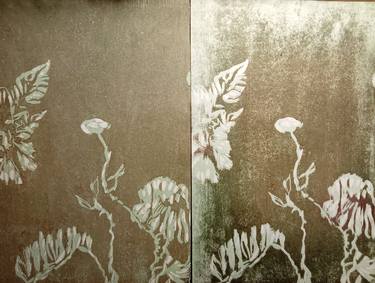
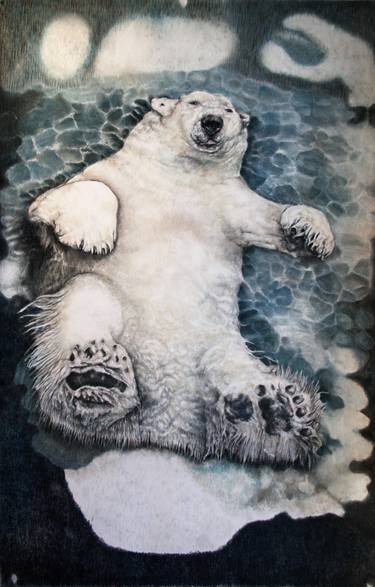
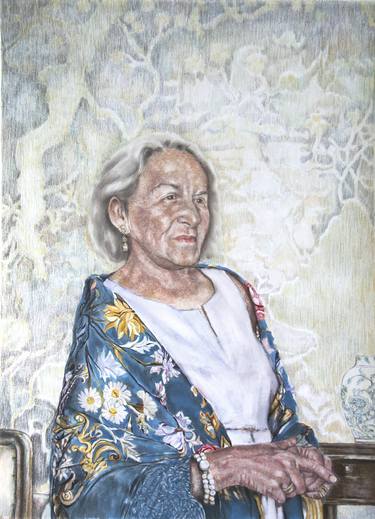
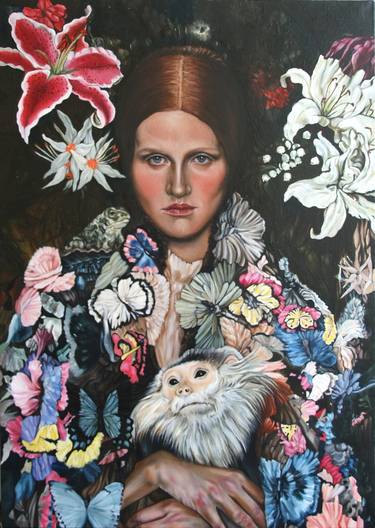
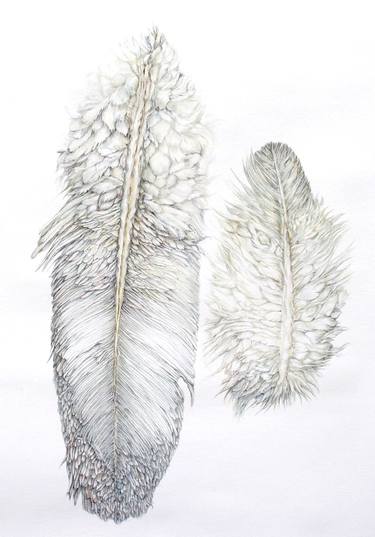
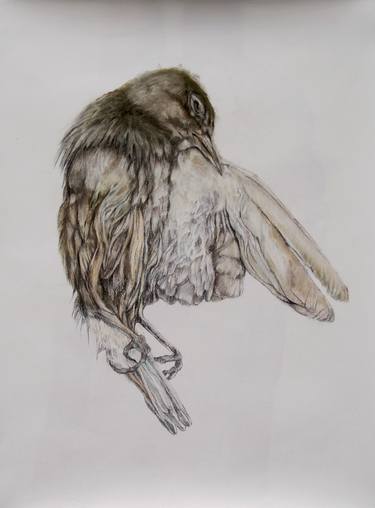
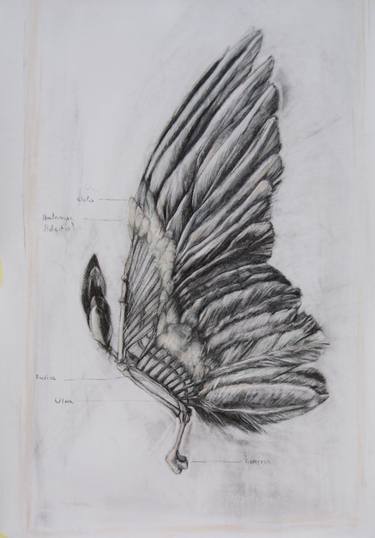
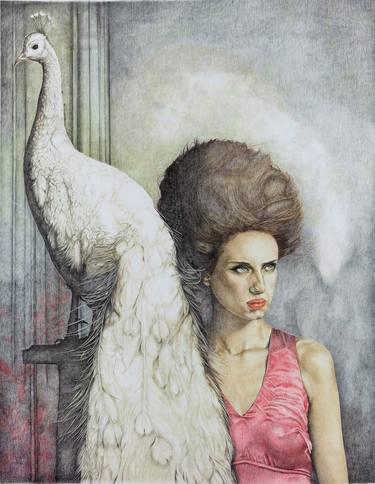
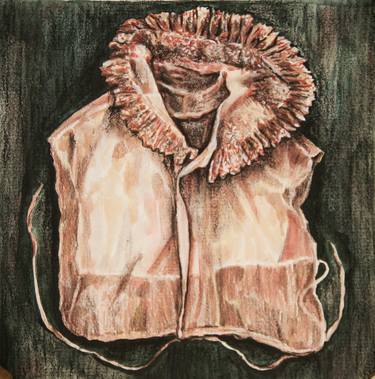
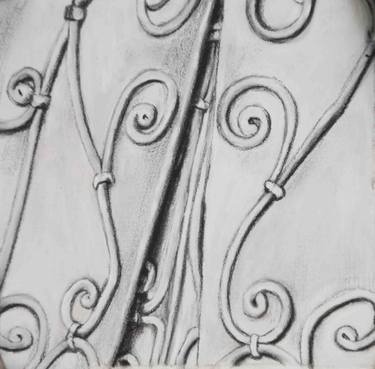
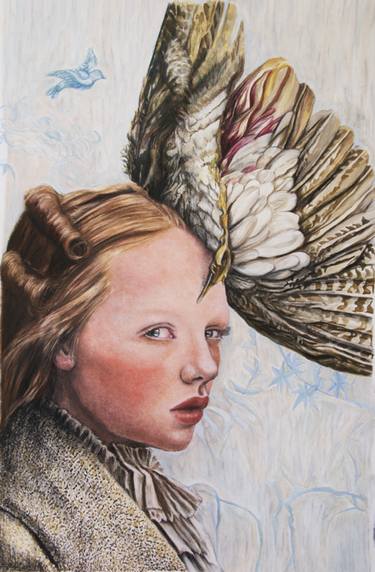
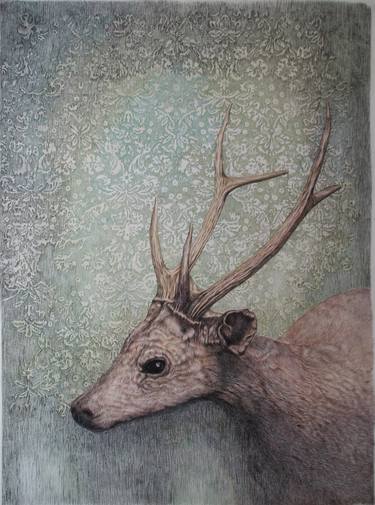
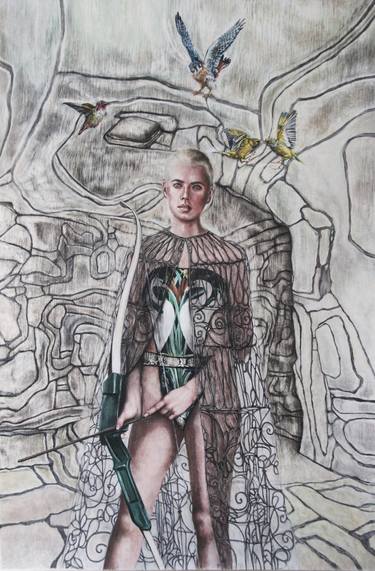
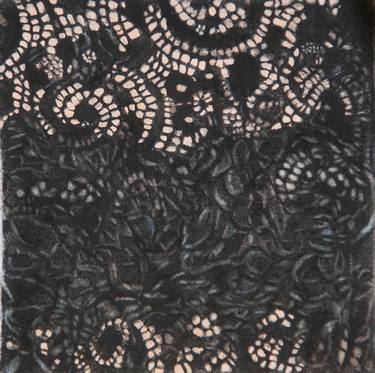
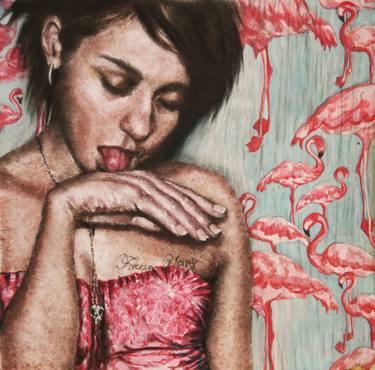
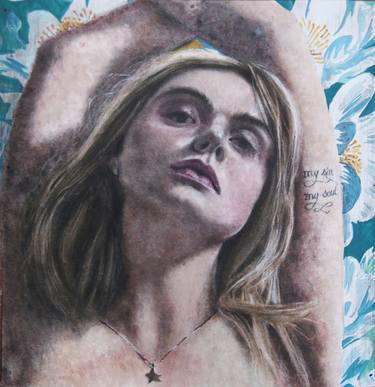
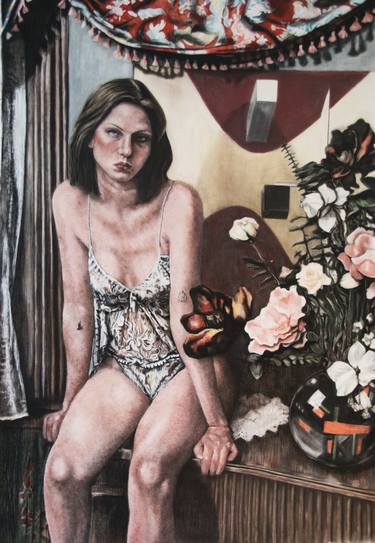
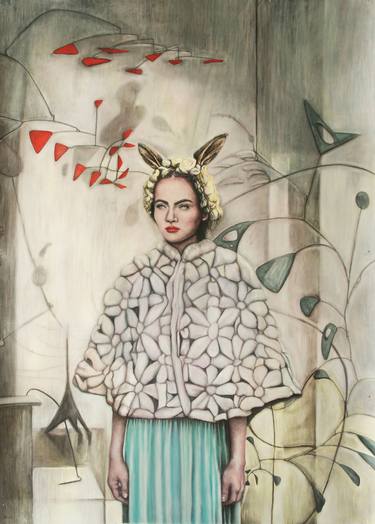
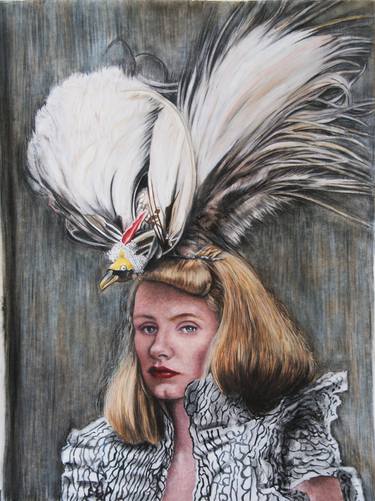
- Valentina Ferrarese works are patiently realised with pencils on paper. Her attention focuses especially on the use of the line, that structures the form, defining it and coloring it. "Compared to the realization speed that new technologies offer us nowadays, the drawing seems to us a very slow proceeding. It is a little like the difference between hand and computer writing: the time you give your hand to trace a line on paper corresponds to the time you give to your brain to elaborate thought and form. Drawing is a slow and complex thinking process. Not only, while drawing the artist develops a deep relation to its work, the paper records every small change in the psychological and in the physical condition of the artist. The emotions or the stress manifest themselves in more or less firm lines, or more or less dark colors." Valentina does not aim to a faithful reproduction of the reality. In great part of her older drawings, black and white pencil on paper, she presents a detailed analisys of the human body, depicted more like a fragile cocoon that symbolizes the life cycle. In the latest drawings on the contrary, she presents complex scenarios in which the human body is not the only subject. These scenarios are staged by the artist and then photographed, to be later transposed on paper. In some cases the artist makes use of the collage technique, by placing together cut-outs from old photos and postcards, digital images, magazines, newspapers, advertisement.The collages are then digitalized, printed and drawn on big format paper. In Valentina Ferrarese's work the color, the technique, the subject and the choosen size, contribute all to the creation of a scenario that we, public, are invited to explore. The depicted scenes place the viewer in a silent landscape, immerged in a magical atmosphere that is emphasized by lines embroidered backgrounds. In some cases the viewer watches the interior of a room but he is not allowed to have a complete view of the place. Indeed, by choosing a particular perspective and view framing, the artist forces the public to focus his attention on few enlarged details. Realized with almost maniacal care, the details often remember us of still-lifes but differently from the traditional still-life, in Valentina's drawings the animals are not quarries of a hunt. They work as destabilizing element in an otherwise fairy-tale picture. The portrayed animals have undergone a scientific/amateur procedure called taxidermy, a word composed by the greek Tassein=order and Derma=skin. It is a preparation technique for animals skins that guarantees a long time preservation. The body mass is replaced by other materials and the animal is stuffed so that he appears to be alive. In the attempt to preserve the beauty of the animal, taxidermy transforms it into a frivoulous contemplation object. -
Portraits
-Valentina Ferrarese is a Berlin based portrait artist and has been specialising in painting and drawing portraits since her graduation from the Academy of of Fine Arts in Venice in 2000. Why people come to me for a portrait?
A portrait is a very special art object. It depicts a specific reality, not any but yours: you and your world, your family and your house, your house-pet and your flowers, or even you in an abstract enviroment. A portrait is a personal object, that you can keep in your sleeping room, or a design piece placed in nice view for the happyness of your many guests. But the portrait plays also and above all another important role, is an object of memory. If you let it, it will remain in your family for the generations to come. Differently from photos and far away from the digital world, a drawing like a painting is an irreproducible art piece that can exist only once. This uniqueness speaks for you and of you and, of course, tells thes story of your life.
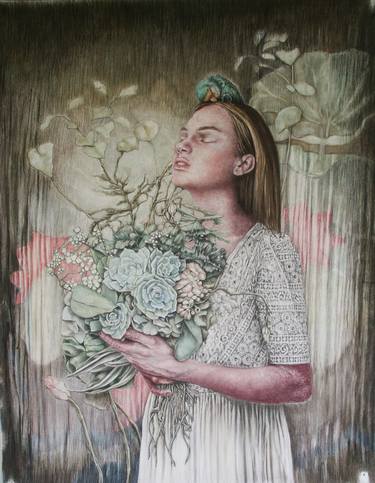
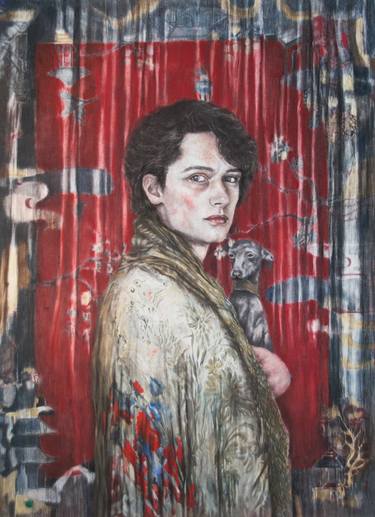
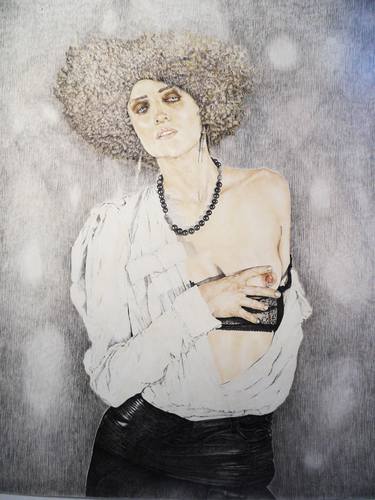
Portraiture is a medium that has always been a very important part of my artistic research. I am fascinated by the human body and by the dynamics involved in the making of the portrait. Even though my style has been changing during the years, also from abstract to figurative, the medium I used still remains the same. My portraits are realized with pencil on scenography paper. The working process consists in creating a drawing that reproduces reality and at the same time uncover the inner essence of the subject. Whether I am drawing a portrait of somebody known to me or somebody that is initially a stranger, the process does not change. As I work on a portrait I am continually engaged by the process of analysing the person through the building up of colours and lines layers. Each small line that I patiently trace, defines the smallest features of the portrayed subject and its surroundings. The result is a very detailed picture, that reveals the innermost character of people and things, and sometimes also animals. My motivation as a portrait painter has always been to explore the human nature by observing, analysing and reproducing it. The use of the pencil allows me to focus on details and investigate the forms through the movement of my hand while drawing. I am interested in the enviroment in which people live, how they interact with it, how they modify it and feel in it. Drawing is for me a very intense process, an act of thinking and understanding. Since I was a child, I have learned to hold a pencil and color within forms. Soon, drawing became the tool through which I could sense the world around me and connect to it.-…Read More
Education
STUDIES
2005 / 2008 Master: Kunst im Kontext/Art in Context, University of Arts, Berlin/Germany. Fields: Art Theory, Art praxis with social groups, Memory Politics.Master dissertation: "The imaginative potential of the void as contemporary monument. (Case of study: Berlin. Original title: „Das imaginative Potential der Leere als zeitgenössisches Monument“, supervising professor: Wolfgang Knapp.
2001 / 2002 Post Graduate for contemporary art and curatorial praxis, University of Architecture, Venice, Art Department. Supervising professor: Olafur Eliasson.
2002 / 2003 Guest student at the Post Graduate Program for visual arts and curatorial praxis, Piet Zwart Institut (Willem De Kooning Akademie), Rotterdam/Holland.
1995 / 2000 Accademia di Belle Arti di Venezia (Fine Arts Academy of Venice, Italy). Field: Painting. Academy degree of 109 on 110 points. Dissertation: „William Kentridge. Survivor/Surveyor of a landscape“; supervising professor Prof.ssa Gloria Vallese.
1997 / 1999 Private School for classical Music (San Dona´, Venice), Field: Opera singing.